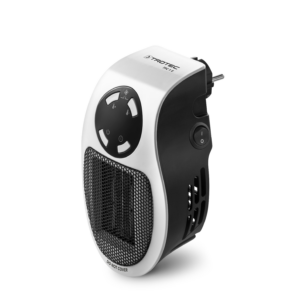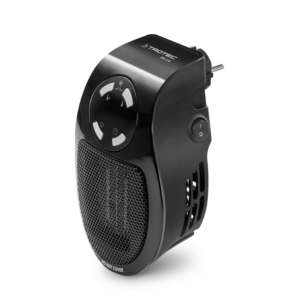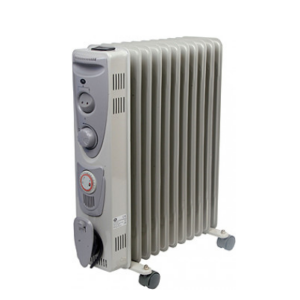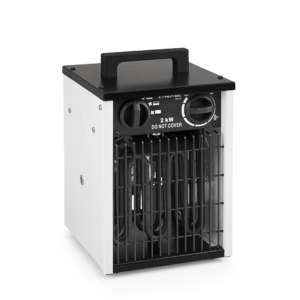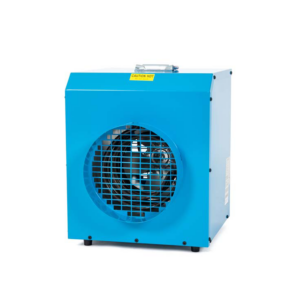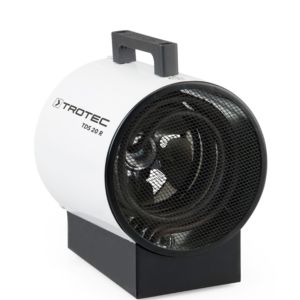

Citycool have a wide range of heating equipment specially designed for the most demanding of requirements. Citycools range of portable heaters (2kw – 100kw +) are available for hire or for purchase. Portable and easy to set up, the heaters are ideally suited to the hire market. No harmful combustion fumes are emitted as heaters are either electrically or indirectly fuelled.
Heaters
- Extra heating during the colder temperatures
- Events: parties, marquees, corporate events
- Drying out newly constructed buildings
- Temporary or back up heating
- Drying out old or damp buildings and can be used in tandem with our dehumidifiers and air movers.
Heat Performance Calculation
The following formula can be used to make an estimation of the heating performance for rooms approx. 1000m³
Room volume m³ x K-VALUE x desired temperature difference = required KCAL
Where K-VALUES are as follows:
- New building (good insulation): 1.2K-VALUE
- Average insulation: 2.2K-VALUE
- Bad insulation (old house): 3.0K-VALUE
- No insulation (marquee): 4.0K-VALUE
To convert KCAL into Watts, use the following formula: measured KCAL x 1.16 = Watt
EXAMPLE:
- Complete house 140m², height 2.7m, windows installed.
- Volume = 378m³
- Insulation / K-VALUE: 2.0
- External minimum temperature approx. = -2ºC
- Desired room temperature = 12ºC
- Temperature difference = 14ºC
CALCULATION: 378x2x14x1.16 = 12,277Watts = 12.2kw
All portable heaters have different energy supplies which are then converted to heat in different ways.
Basically there are two different types of oil/gas heaters and these are i) Direct heaters and ii) Indriect heaters. Then there are also electric heaters:
Direct Heaters
In a direct fired system (gas heater or simple oil heater) the fan which blows out the heated air to the room also supplies the heater with the combustion air. The fuel is atomised in the combustion chamber, ignited and burnt. The hot gases are subsequently mixed in with the air form the fan.
For this reason this process has a 100% output, since the entire amount of heat generated is available to the room.
However, direct heaters also release exhaust gases and moisture from the combustion process directly into the room, therefore these rooms must be very well ventilated.
Expert Tip: Direct heaters are very unsuitable for building drying, because for every litre of fuel burnt approximately 1.64kg of additional water vapour is generated which condenses on the buildings surfaces.
Indirect Heaters
Gas or oil fired/fuelled heaters, however, with an indirect heater the heated air being supplied to the room is completely separate from the combustion chamber of the heater. Indirect heaters generate clean, dry heat without combustion gases or water vapour entering the room.
Electrical Heaters
These heaters offer the safest, fastest and most convenient method of heating a relatively small area. Electrical heaters are distinguished by the methods of transporting the heat. In the case of fan heaters, the heat which is generated is transported via an internal fan and distributed evenly throughout the room. In the case of infra red heaters, the heat is transported by light waves.
The best heater to use always depends on the respective application. For example never use a direct heater where there is a risk of fire due to the presence of flammable material. Always use an indirect heater or electrical heater where there is limited ventilation. Electrical heaters should be used to heat interior rooms or when you want to dry out a building faster!